
Dryer Vent Safety Cleaning
Combustible lint build-up inside laundry exhaust lines is one of the leading causes of residential structural fires. We clear the entire duct run from the appliance to the outdoor termination hood, restoring safe airflow and fast drying times.
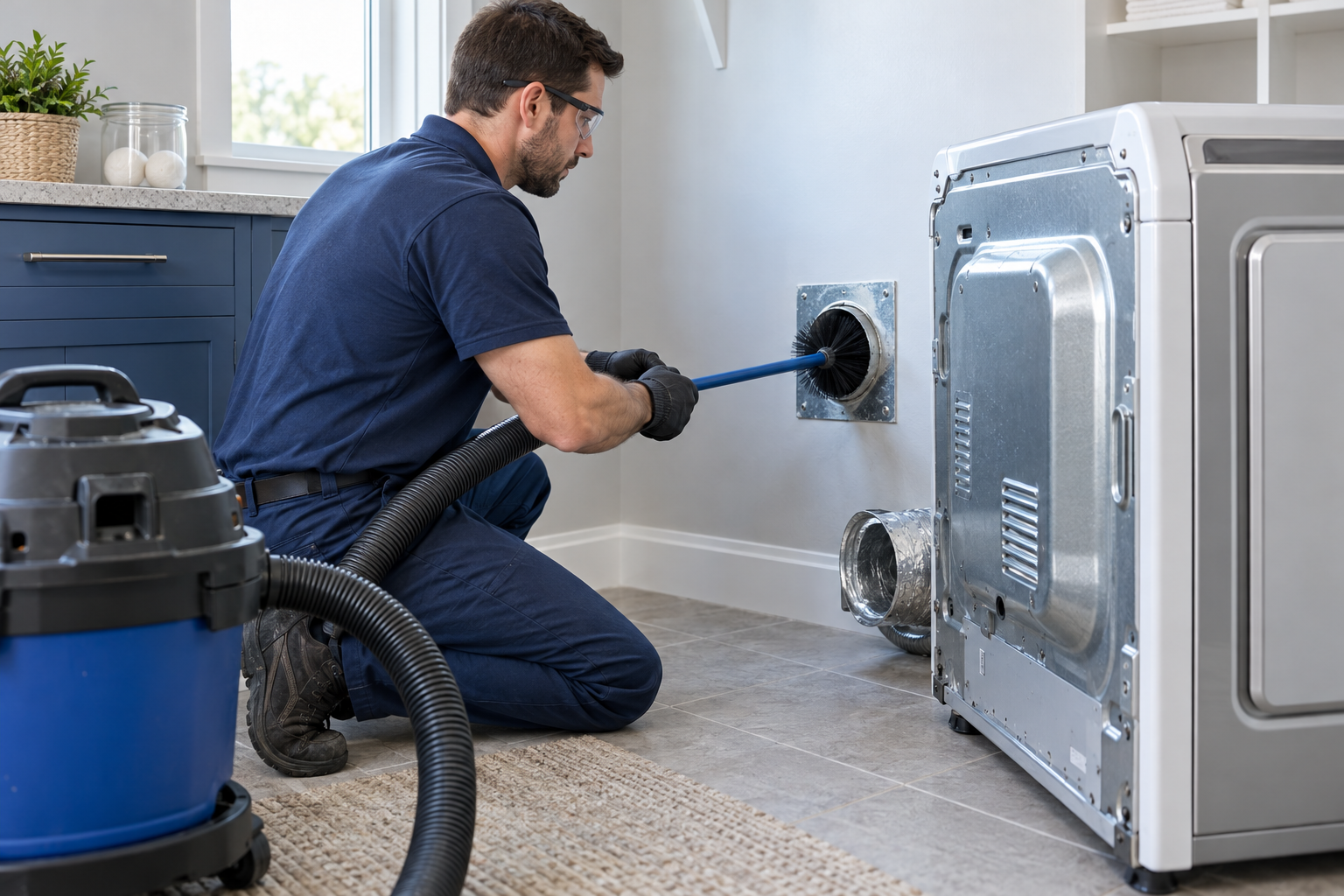
Signs Your Dryer Vent Is Dangerously Clogged
If your laundry room shows any of these symptoms, schedule an airflow cleaning before operating the dryer again.
Clothes take more than one cycle to dry
When lint restricts exhaust airflow, moisture cannot escape the drum, doubling or tripling drying times.
Appliance exterior or laundry room is excessively hot
Trapped hot air backs up into the cabinet, stressing internal thermostats and heating elements.
Burning lint odor during operation
An immediate warning sign that trapped lint fibers are touching high-temperature heating components.
Outside exhaust hood damper flap does not open
When the dryer runs, the exterior vent flapper should open forcefully. If it barely moves, the line is obstructed.
Excessive lint builds up behind or around the dryer
Gaps or pressure build-ups cause lint to blow backward into living areas and floor crevices.
Over a year since last professional vent cleaning
Standard residential laundry usage accumulates substantial combustible lint along corrugated and smooth duct walls annually.
How We Clean Your Dryer Vent
We don't just vacuum the lint trap. We scour the entire rigid or semi-rigid wall run all the way outside.
Appliance Pull-Out & Transition Duct Inspection
We safely disconnect the appliance and inspect the flexible transition line connecting the back of your dryer to the wall.
High-Volume Vacuum Containment Setup
A specialized lint vacuum collector is connected to capture dislodged fiber material without spreading lint into your home.
Rotary Brush Agitation
Flexible motorized rods with spinning bristle heads traverse the entire length of the duct run from indoor connection to exterior vent exit.
Exterior Exhaust Hood & Flapper Clearing
We inspect and clear the outdoor vent hood, ensuring bird guards or flapper doors open and close freely without debris jamming.
Airflow Velocity Test & Reconnection
We securely reconnect the dryer transition line, reposition the appliance, and verify strong exhaust airflow at the outdoor termination point.
How Homeowners Should Prepare
- Empty the Dryer Drum: Remove wet or dry clothes so our technicians can safely slide the machine forward.
- Laundry Room Clearance: Move laundry hampers, detergents, and items sitting on top of the dryer.
- Exterior Vent Access: Ensure outdoor bushes or snow banks do not completely block the ground-level exhaust hood.
What Affects Dryer Vent Pricing
Pricing is straightforward based on duct run length and access conditions:
- Duct Run Length: Short ground-floor exterior wall runs vs multi-story roof terminations or long basement runs.
- Termination Location: Ground-level side vent vs high ladder second-story or rooftop exit.
- Bundle Savings: Booking dryer vent cleaning alongside whole-home air duct cleaning is our most economical option.
Dryer Vent Cleaning FAQs
How often should a residential dryer vent be professionally cleaned?
Most safety organizations and appliance manufacturers recommend annual cleaning. Homes with large families running multiple loads daily, or runs over 15 feet with multiple elbows, may require attention every 6–9 months.
Can I just clean the lint screen myself?
Cleaning the lint screen after every load is vital, but it only catches approximately 70% to 80% of lint. The remaining fine fibers bypass the screen, travel into the internal blower, and stick to the moist exhaust duct walls over time.
Do you service dryer vents that vent through the roof?
Yes. Roof-terminating vents are especially prone to lint buildup because the dryer must push moisture and heavy lint vertically against gravity. We use specialized flexible rod systems and rooftop safety gear.